SServices
Seven areas of
engineering work
Each service below is described by its purpose, its typical scope, how delivery is approached, and the outcomes it is intended to produce. No guarantees of result are offered, because none can be made honestly in advance of understanding a specific system.
- 01Custom software development
- 02Web application development
- 03Backend engineering and API integration
- 04Cloud infrastructure and deployment
- 05Workflow automation
- 06Software testing and quality assurance
- 07Technical maintenance and modernisation

S.01
Custom software development
Applications built around a specific process rather than adapted from a generic product.
Purpose
To support a business process that off-the-shelf software either does not cover or covers only by forcing the organisation to work in an unnatural way.
Typical scope
- Requirements capture and domain modelling
- Database schema design and migration strategy
- Core application logic, permissions and audit trails
- Administrative interfaces and reporting views
- Import and export paths for existing data
Delivery approach
We begin by writing down the entities, rules and exceptions as we understand them, and confirm that description with the people who run the process. The first build targets a single complete path through the system so it can be exercised with real data early. Subsequent increments extend coverage, each accompanied by tests, migrations and notes on what changed.
Intended outcomes
- A system whose behaviour matches a written specification
- A codebase that another engineering team can read and extend
- Data that can be exported in an open format at any point
S.02
Web application development
Browser-based interfaces designed for daily operational use, on any screen size.
Purpose
To give users a reliable interface to a system — one that behaves predictably under slow connections, imperfect data and repeated use.
Typical scope
- Interface architecture, routing and state management
- Responsive layouts for mobile, tablet and desktop
- Accessibility: semantic structure, keyboard operation, contrast
- Server rendering or prerendering where content must reach crawlers
- Performance budgets, caching strategy and asset loading
Delivery approach
Layouts are designed from the narrow viewport outward. Interaction states — loading, empty, partial, error — are specified alongside the successful path rather than discovered in testing. Pages are built so that each addressable view has its own URL and reloads correctly.
Intended outcomes
- Interfaces that remain usable on constrained devices and networks
- Views that can be linked, bookmarked and refreshed without loss of state
- Measured performance against realistic device profiles
S.03
Backend engineering and API integration
Services, data layers and the connections between systems that were never designed to meet.
Purpose
To hold the rules, data and integrations of a system in one place that is testable, observable and safe to change.
Typical scope
- Service and API design, versioning and documentation
- Authentication, authorisation and rate limiting
- Third-party API integration, including retries and reconciliation
- Background jobs, queues and scheduled processing
- Structured logging, metrics and tracing
Delivery approach
Integrations are treated as unreliable by default: operations are made idempotent, failures are retried with backoff, and partial states are reconciled rather than assumed away. External contracts are wrapped behind an internal interface so a provider change does not spread through the codebase.
Intended outcomes
- Documented interfaces that other teams can build against
- Failure modes that are visible in logs and metrics instead of silent
- Integration behaviour covered by automated tests against recorded responses
S.04
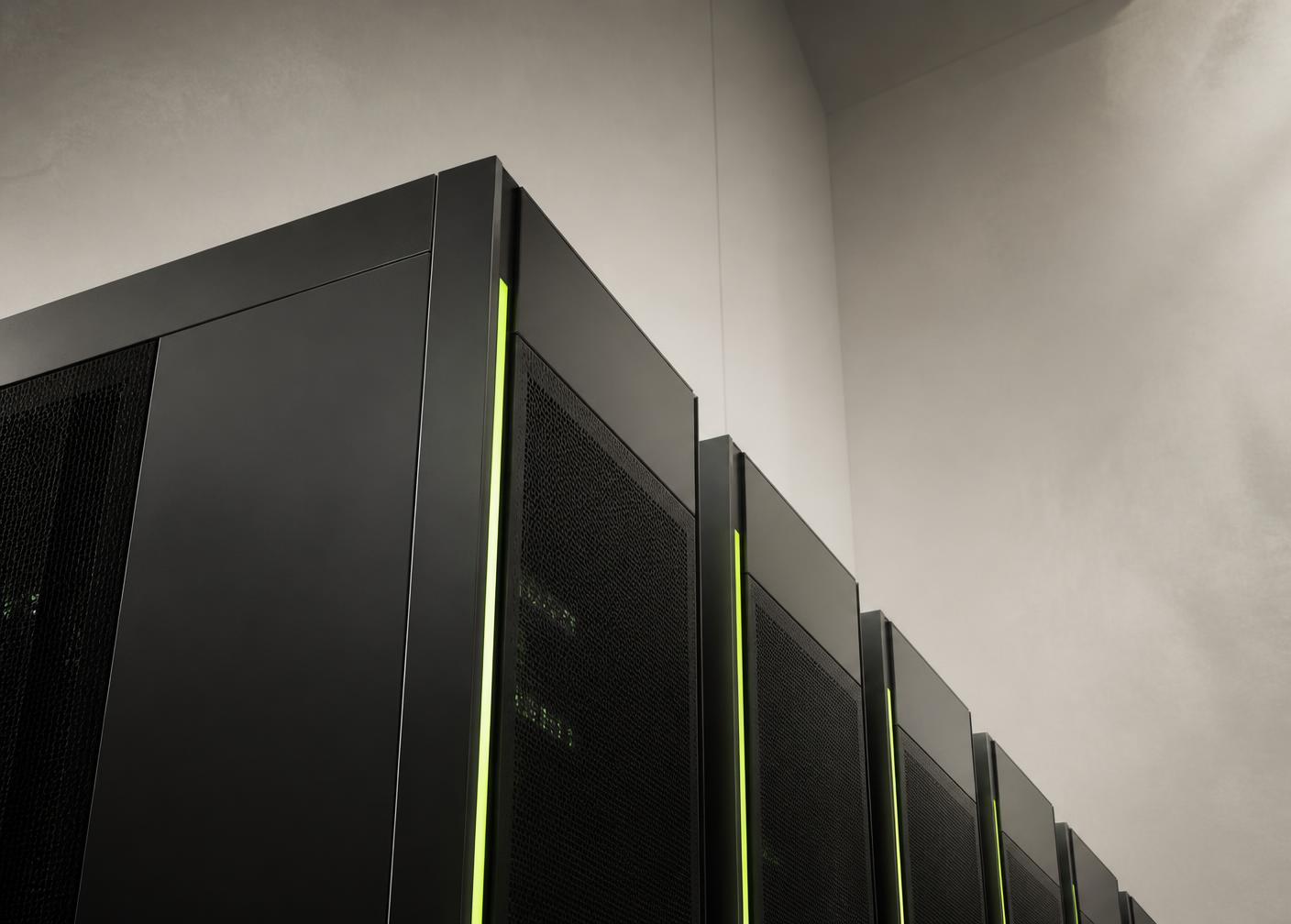
Cloud infrastructure and deployment
Environments defined in configuration, deployed by pipeline, and reversible.
Purpose
To make the running environment an artefact of the repository rather than a configuration that exists only in one administrator's memory.
Typical scope
- Infrastructure described as code and held in version control
- Build, test and deploy pipelines with a defined rollback path
- Environment parity across development, staging and production
- Secret management, role-based access and network boundaries
- Backups, restore drills and monitoring with alert routing
Delivery approach
We start from the operational requirements — availability expectations, data residency, recovery objectives, budget — and choose the smallest architecture that satisfies them. Managed services are used where they genuinely reduce work, and the cost of moving away from each one is stated before it is adopted.
Intended outcomes
- Environments that can be rebuilt from source in a known sequence
- Deployments that are repeatable and can be rolled back
- A restore procedure that has been executed, not merely written
S.05
Workflow automation
Replacing the recurring manual steps that sit between two systems.
Purpose
To remove repetitive transcription, manual report assembly and inbox-based approvals from routine operations, while keeping human judgement where it is needed.
Typical scope
- Mapping the process exactly as it currently runs
- Scheduled jobs, event handlers and data synchronisation
- Document and report generation
- Notification and escalation rules
- Audit records for every automated action
Delivery approach
Automation is introduced one step at a time, with the manual path kept available until the automated one has been observed working on real data. Every automated action writes an audit record so the process remains explainable after the fact.
Intended outcomes
- Fewer recurring manual steps in day-to-day operations
- A traceable record of what ran, when, and with what result
- Clear handover points where a person still makes the decision
S.06
Software testing and quality assurance
A layered test suite that makes change safe rather than merely reporting on it.

Purpose
To reduce the risk of regression, so that releasing a change is a routine act instead of an event.
Typical scope
- Unit tests around business rules and edge cases
- Integration tests across databases, queues and external APIs
- End-to-end coverage of the paths that cannot be allowed to fail
- Regression tests derived from reported defects
- Continuous integration configuration and reporting
Delivery approach
Tests are written with the code they cover. Reported defects are reproduced with a failing test before a fix is written. Coverage is directed at risk rather than at a percentage figure, and slow or flaky tests are fixed or removed rather than tolerated.
Intended outcomes
- A suite that runs on every change and blocks a broken build
- Defects that, once fixed, are prevented from returning unnoticed
- A documented view of what is covered and what is not
S.07
Technical maintenance and modernisation
Keeping an existing system healthy, and improving it without stopping it.
Purpose
To extend the useful life of software that still serves the business but has fallen behind on dependencies, structure or operational practice.
Typical scope
- Assessment of the current codebase, dependencies and deployment
- Dependency and runtime upgrades with a staged rollout
- Incremental refactoring behind stable interfaces
- Introduction of tests and observability where none exist
- Documentation of behaviour that currently lives only in the code
Delivery approach
Modernisation proceeds by strangling rather than replacing: new behaviour is built alongside the old, traffic is moved across in controlled steps, and the legacy path is retired only once the replacement has been observed handling real usage. A rewrite is proposed only where incremental change has been shown not to work.
Intended outcomes
- A supported dependency set with a documented upgrade path
- Improved structure without an interruption to service
- Written knowledge of how the system actually behaves today
Scoping an engagement
Every engagement is scoped in writing before work begins
Services are combined as the problem requires — a maintenance engagement often includes testing work, and an automation project usually involves backend integration. Send a description of the system and the outcome you need to rosiecarter197282@gmail.com.